

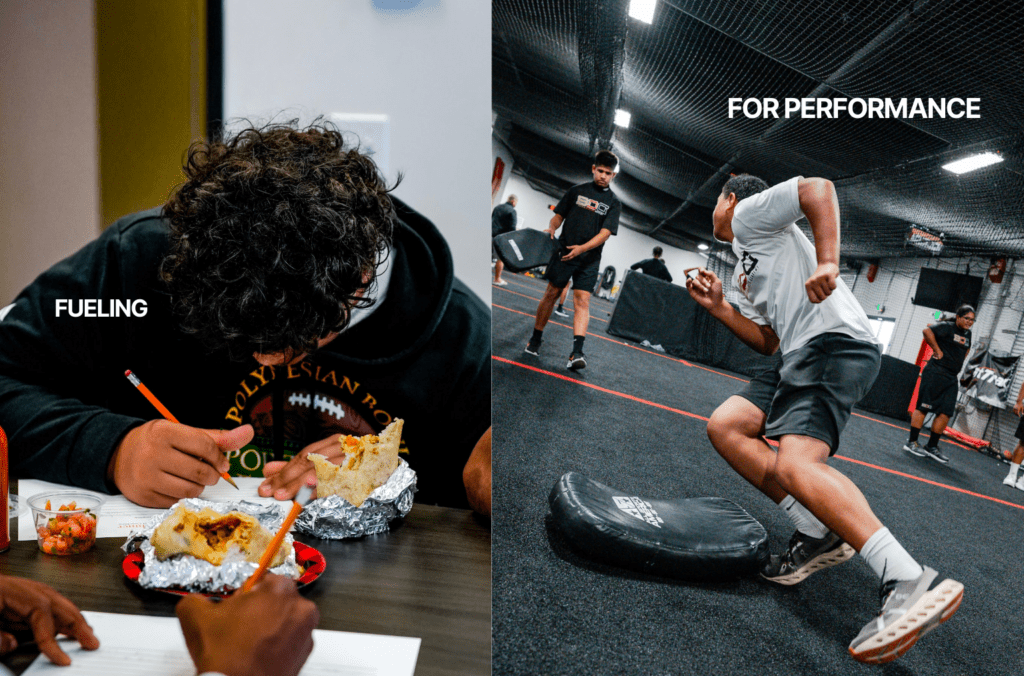
We know. Busy schedules make healthy eating feel complicated.
Between school, training, and extra curricular activities, many student-athletes are under-fueled without anyone realizing it. Over time, this can affect energy, focus, mood, and performance.
The goal isn’t perfection. It’s creating simple nutrition habits that support growing bodies and active minds.
Below are practical, parent-friendly healthy eating tips for student-athletes, with real examples you can apply right away.
Tip #1: Eat at Regular Times (Even on Busy Days)
One of the biggest challenges students face is skipping meals due to packed schedules. Consistent fueling helps stabilize energy levels and focus throughout the day.
Why it matters:
Irregular eating leads to energy crashes, irritability, and poor concentration, especially during afternoon training sessions.
Examples for parents:
- Encourage breakfast before school, even if it’s quick (yogurt + fruit, eggs + toast)
- Plan a mid-morning snack on training days
- Make post-practice meals non-negotiable
At Sapolu Destined Academy, designated meal breaks are built into the school day for consistent energy levels.
Tip #2: Build Balanced Meals That Fuel Both School and Sports
Student-athletes need fuel for the classroom and the field. Balanced meals support academic focus and physical output.
What a balanced meal looks like:
- Protein (chicken, fish, eggs, beans)
- Carbohydrates (rice, pasta, potatoes, fruit)
- Healthy fats (avocado, olive oil, nuts)
- Vegetables for vitamins and recovery
Real-life example:
Instead of grabbing fast food after practice, a meal with grilled chicken, rice, and vegetables helps athletes recover faster and stay focused for homework later.
Tip #3: Don’t Underestimate the Power of Fresh, Quality Food
Quality matters, especially for growing student-athletes.
Highly processed foods can leave athletes feeling sluggish and unfocused, while fresh meals support consistent energy and mood.
Thanks to our partnership with Right Mealz, students have access to fresh, nourishing meals on campus. This removes the guesswork for families and ensures students are properly fueled throughout the day.
Tip #4: Teach Athletes to Fuel Before and After Training
Young athletes often forget to eat around practices.
Why it matters:
Training without fuel increases injury risk and slows recovery.
Examples:
- Pre-practice snack: banana with peanut butter or a granola bar
- Post-practice meal: protein + carbs within an hour
- Hydration paired with food, not instead of it
These habits are especially important for multi-sport athletes who train year-round.
Tip #5: Nutrition Is a Life Skill, Not Just a Performance Tool
Learning how to eat well helps student-athletes develop independence, discipline, and self-awareness.
Why it matters:
College programs and schools for athletes want students who can manage their own routines.
At SDA, nutrition education is part of a dedicated course that teaches students:
- How food impacts performance and focus
- How to make smarter choices independently
- How to build habits that support long-term health
This aligns with the expectations athletes will face later in college recruitment in sports and beyond.
The Bottom Line for Parents
Just like academics and training, nutrition works best with structure. This is one reason families seek schools for athletes, sports high schools, and private schools that intentionally support the full student-athlete life.
At Sapolu Destined Academy, nutrition is treated as a core pillar of development, supported through education, structure, fresh meals, and designated time to eat.
💬 Want to learn more about our holistic approach?
or
schedule a campus tour to experience SDA firsthand.